
For research purposes only:
Too much of a good thing can be a bad thing and that’s especially true of Methylene Blue.
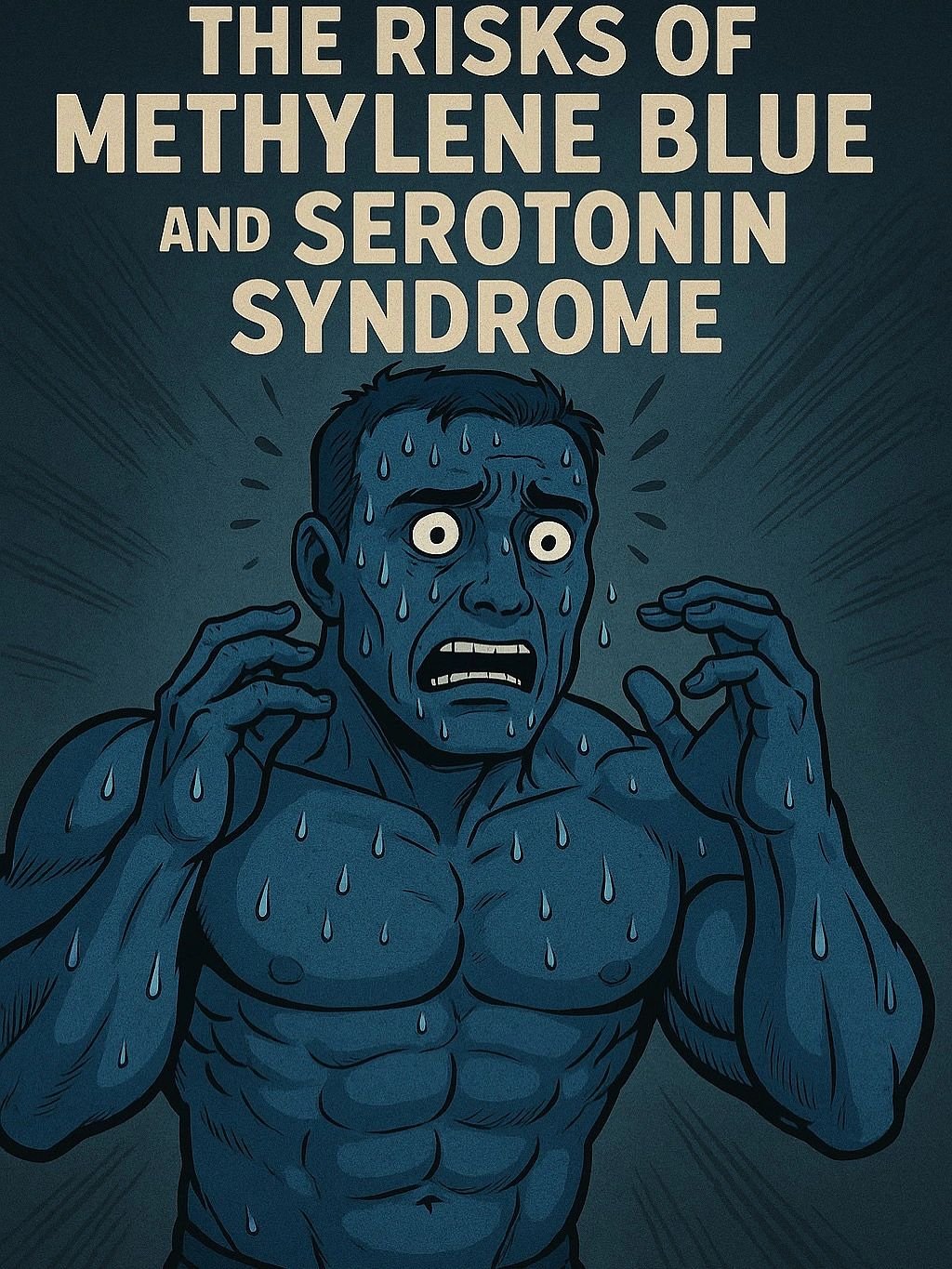
Methylene blue increases brain serotonin levels by acting as a potent and reversible inhibitor of monoamine oxidase A (MAO-A), the enzyme responsible for breaking down serotonin in the brain. When MAO-A is inhibited, serotonin metabolism is reduced, leading to higher intrasynaptic serotonin concentrations.
This effect is particularly significant when methylene blue is combined with serotonergic drugs (such as SSRIs or SNRIs), because the accumulation of serotonin can reach toxic levels, resulting in serotonin syndrome—a potentially life-threatening condition characterized by symptoms such as agitation, confusion, muscle rigidity, and hyperthermia.
Key categories of nootropics and supplements with potential interactions:
1. Nootropics/supplements with serotonergic activity:
• St. John’s wort (herbal antidepressant with serotonergic effects).
• L-tryptophan, 5-HTP (serotonin precursors used for mood/cognition).
• Rhodiola rosea (may weakly influence serotonin pathways).
• SAMe (affects serotonin and other neurotransmitters).
2. Nootropics affecting MAO:
• Selegiline or moclobemide (other MAO inhibitors, sometimes used for cognitive enhancement)—risk of hypertensive crisis or serotonin syndrome increases.
Other nootropic interactions:
Combining 9-Me-BC (9-Methyl-β-carboline) with methylene blue warrants caution because both compounds act as inhibitors of monoamine oxidase (MAO), particularly the MAO-A isoform. Here’s why this interaction is potentially significant and potentially risky:
• Both are MAO Inhibitors:
• 9-Me-BC inhibits both MAO-A (with high potency) and MAO-B, with an IC50 of 1 µM for MAO-A and 15.5 µM for MAO-B.
If you’re taking Reta this could even further complicate things:
Glucagon-like peptide-1 (GLP-1) and its analogs can act within brain regions such as the dorsal raphe to increase electrical activity of serotonin neurons and interact with serotonin receptor-mediated pathways, most critically the 5-HT2A receptor, to influence physiological processes like energy balance.